17 October 20265 min read
From Himalayan Goat to Your Shoulders: How a Pashmina Is Made
Every Sarayou Threads shawl begins its life 4,000 meters above sea level, on the back of a mountain goat — and passes through the hands of spinners, dyers, and weavers before it ever reaches you.
No machines. No shortcuts. Here is the journey, step by step.
1. It starts with the goats
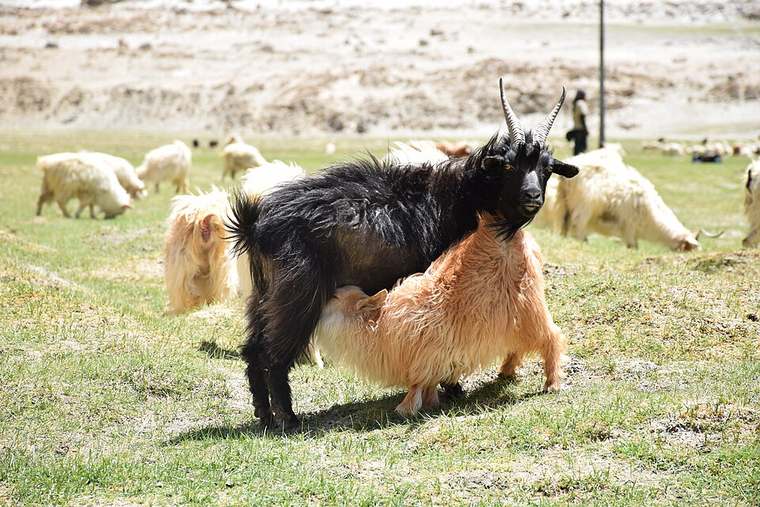
High in the Himalayas, Changthangi goats grow an incredibly fine undercoat to survive winters of minus 40 degrees. Each spring, herders gently comb out this soft down by hand as the goats naturally shed it — about 80 to 170 grams per goat per year.
After cleaning, one shawl needs the entire yearly yield of three to four goats. That scarcity is the first reason real pashmina is precious.
2. Cleaning and sorting
The raw fiber arrives mixed with coarse guard hair and dust from mountain pastures. Artisans clean it and then sort it by hand, separating the finest, softest down from everything else.
Only the best fibers make it into a Sarayou shawl — the rest is set aside for coarser goods.
3. Hand-spinning the yarn
Spinners — many of whom learned from their mothers and grandmothers — draw the down into yarn on simple spinning wheels. Pashmina fiber is so fine and short that it demands extraordinary skill; a moment’s inattention and the thread snaps.
This is slow work. The yarn for a single shawl can take days of spinning alone.
4. Dyeing with care
The yarn is dyed in small batches to achieve our colors — from natural undyed creams and greys to rich, deep tones. Small batches mean every dye lot is slightly unique, which is part of the charm of handmade textiles.
No two shawls are ever exactly alike.
5. Weaving on the wooden loom
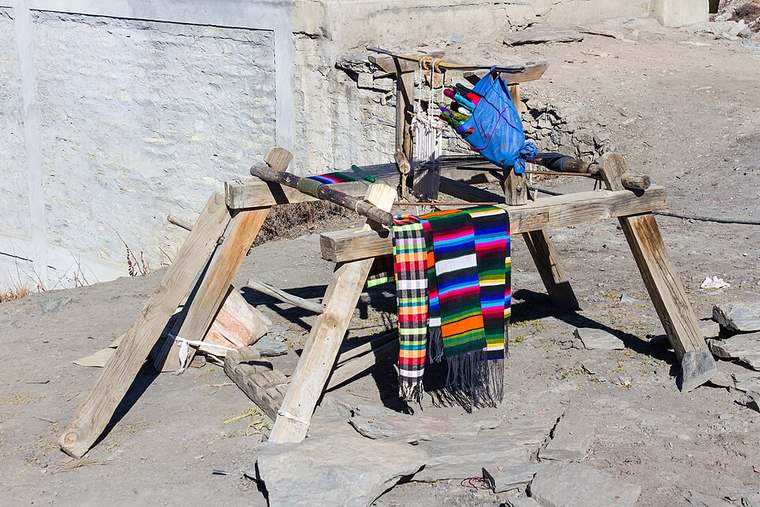
Then comes the heart of it: a weaver sits at a traditional wooden handloom and builds the shawl thread by thread, row by row. A single pashmina can take up to two weeks of full-time weaving.
Look closely at a handwoven shawl and you’ll see tiny variations in the weave — the signature of human hands, and the one thing no machine can truly copy.
6. Finishing touches
Finally, the fringe is hand-twisted or knotted, the shawl is gently washed to soften the fibers, and it’s dried in the mountain sun. Then it’s folded, packed, and begins its journey to Adelaide — and to you.
Ready to feel the difference?
Browse handwoven pashminas made by artisan families in Nepal.