17 October 20265 min read
Pashmina vs Cashmere: What’s the Real Difference?
Walk into any market and you’ll hear the words “pashmina” and “cashmere” used as if they mean the same thing. They don’t — though they are closely related. Understanding the difference takes about five minutes, and it will change the way you shop for shawls forever.
Here is the whole story, kept simple.
They come from the same family of goats
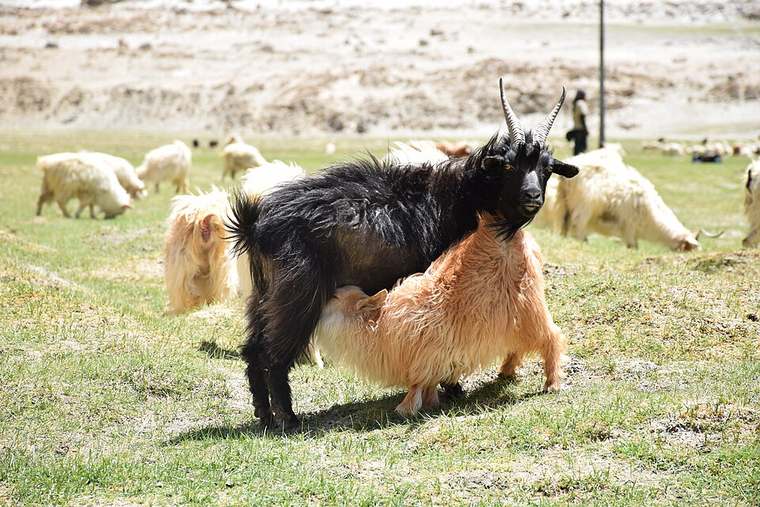
Both fibers come from the soft undercoat of Himalayan mountain goats. Every spring, these goats naturally shed a cloud-soft layer of down that kept them warm through minus-40-degree winters. That down is combed out by hand — never shaved — and spun into yarn.
“Cashmere” is the general name for this soft goat down, and it comes from several regions. “Pashmina” specifically refers to the finest grade, traditionally from the Changthangi goats of the high Himalayas in Ladakh and Nepal. Think of it this way: all pashmina is cashmere, but not all cashmere is pashmina.
The difference is in the fineness
Fiber is measured in microns — millionths of a meter. Regular cashmere runs about 15 to 19 microns. True pashmina is 12 to 16 microns, and the very best pieces go even finer. A human hair, for comparison, is around 70 microns.
That tiny difference is everything. It is why pashmina feels lighter than air, drapes like water, and still keeps you remarkably warm. When you hold a real pashmina, it almost disappears in your hand.
How they feel on your skin
Good cashmere feels soft and cosy — like a warm hug. Pashmina adds something extra: a silky, almost cool smoothness on first touch that warms to your body within seconds. It is lighter, drapes more elegantly, and never feels bulky around the neck.
If a “pashmina” feels thick, heavy, or slightly scratchy, it probably isn’t one — no matter what the label says.
Why real pashmina costs more
One goat produces only about 80 to 170 grams of usable pashmina down per year — after cleaning, barely enough for a fraction of a shawl. A single shawl needs the year’s yield of three to four goats.
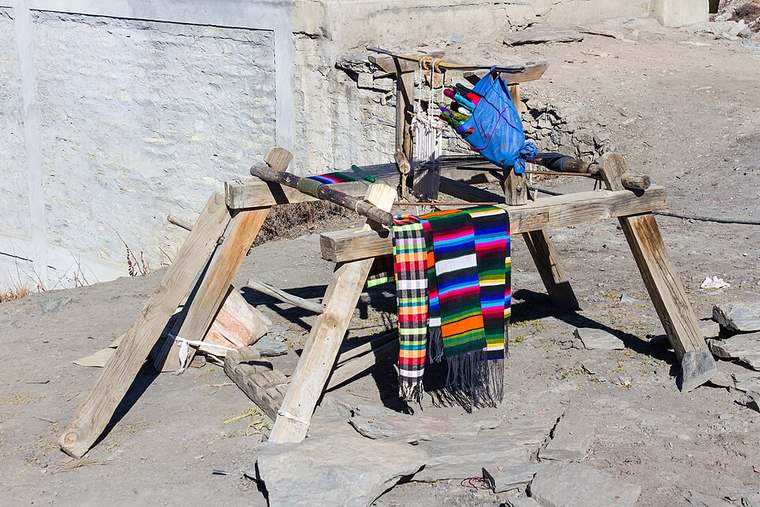
Then comes the handwork: cleaning, hand-spinning, dyeing, and weaving on a wooden loom can take one artisan up to two weeks for a single piece. You are paying for rarity and human skill, not a brand name.
Ready to feel the difference?
Browse handwoven pashminas made by artisan families in Nepal.