17 October 20266 min read
How to Spot Real Pashmina (and Avoid Fakes)
The word “pashmina” sells. That is why so many scarves carry the name while containing little more than viscose and clever marketing. The good news: you don’t need a laboratory to tell the real thing from a fake. Your hands and eyes are enough.
Here are five checks anyone can do.
1. The touch test
Hold the shawl against your cheek — the most sensitive skin you have. Real pashmina feels buttery and smooth, with zero scratch or prickle. Then scrunch a corner in your fist for ten seconds and release it: genuine pashmina springs back with barely a crease, because the fibers are naturally elastic.
Acrylic and viscose fakes feel either slippery-plasticky or dry and lifeless, and they hold creases.
2. Look at the weave, closely
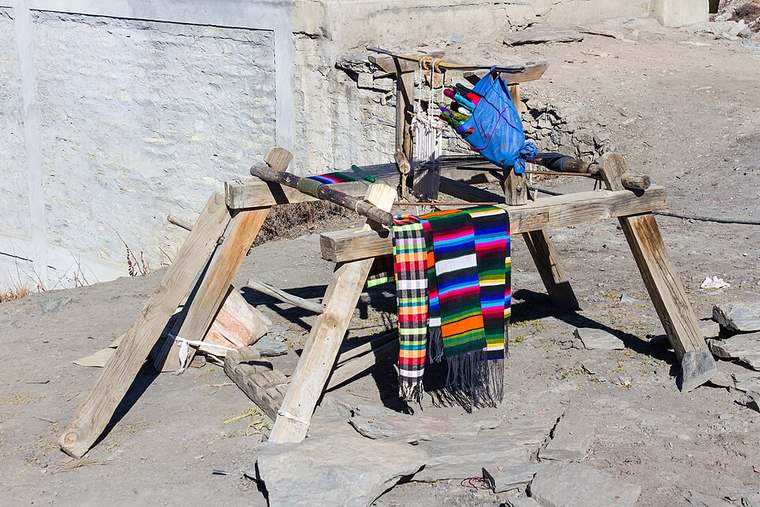
Hold the shawl up to the light. A handwoven pashmina shows a fine, even weave with tiny, charming irregularities — slight variations in the threads that prove human hands made it. The fringe at the ends is usually hand-twisted or hand-knotted, not machine-cut.
Perfectly uniform, machine-exact weaving with glued or laser-cut edges is a red flag.
3. The fringe fiber test
Pull one tiny fiber from the fringe (never from the body of the shawl) and hold a flame to it. Real animal fiber smells faintly like burnt hair and crumbles into soft ash you can crush between your fingers. Synthetic fibers melt into a hard little bead and smell like burnt plastic.
This is the oldest trick in the textile trade, and it still works.
4. The price reality check
Remember the math: three to four goats’ yearly yield plus two weeks of artisan handwork. If a “100% pashmina” shawl costs less than a nice dinner out, the numbers don’t add up. Real handwoven pashmina has a floor price — anyone selling far below it is selling something else.
5. Ask who made it
Honest sellers can tell you where their pieces are woven and by whom. At Sarayou Threads, every shawl is handwoven by artisan families in Nepal — and we’re happy to talk about them. If a seller can’t (or won’t) say where a piece comes from, walk away.
Ready to feel the difference?
Browse handwoven pashminas made by artisan families in Nepal.